
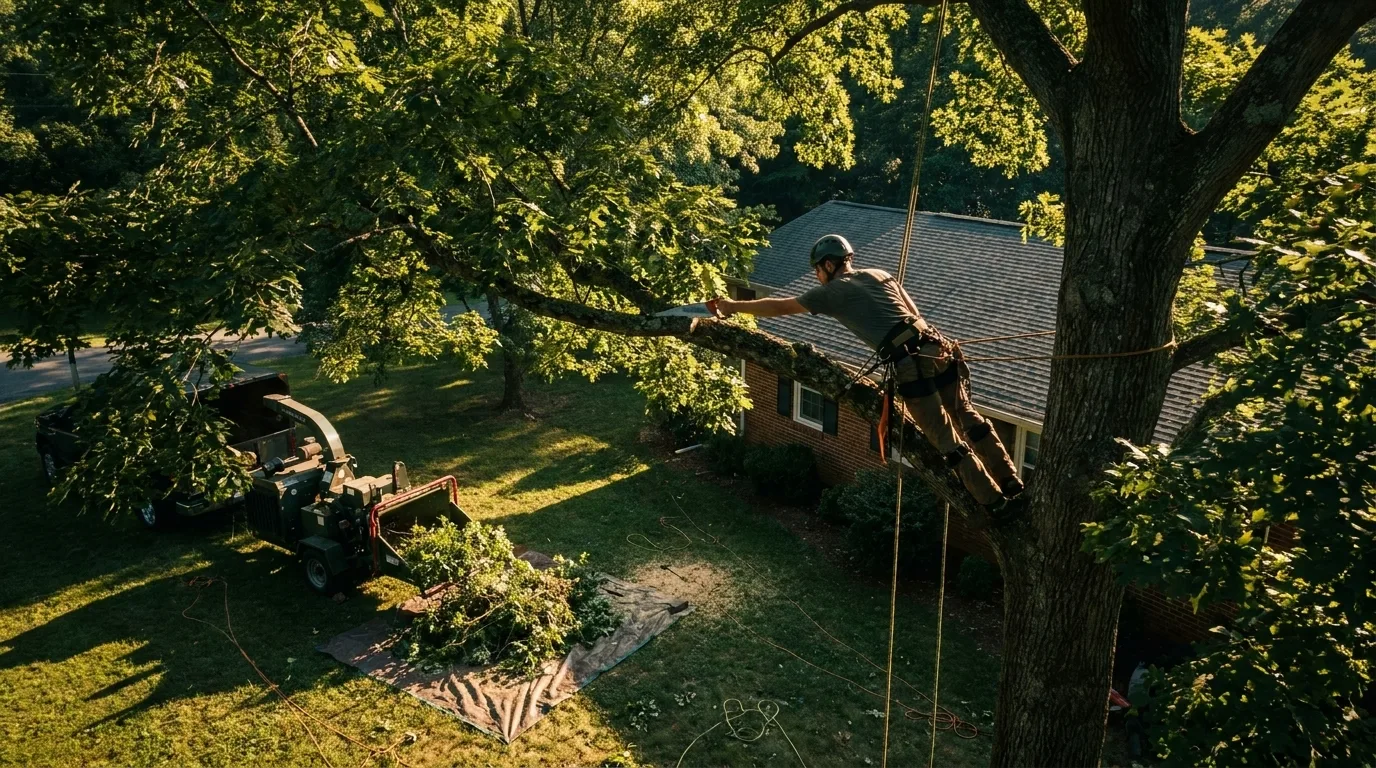
Tree Trimming and Pruning
We cut deadwood, pull limbs back off the house and haul brush before we leave.
Pruning Takes Out Deadwood, Clears the Roof and Thins a Crowded Crown
Most trees people call about do not need to come down. They need the dead wood out, the crown opened up, and the long limbs pulled back off the house. Pruning is the cheaper answer and the better one for the tree, and an arborist certified by the International Society of Arboriculture who owns this company will tell you when it is the right call.
...they did an amazing job of reducing the reach of a huge maple tree in my front yard without harming its health or beauty.
Mary Beth Crowgey • Google review, 2022

Deadwood, Before It Comes Down on Its Own
Dead limbs do not stay put. They let go in the first hard wind, usually over a car or a walkway. Taking them out on a planned day beats cleaning them up on a bad one.
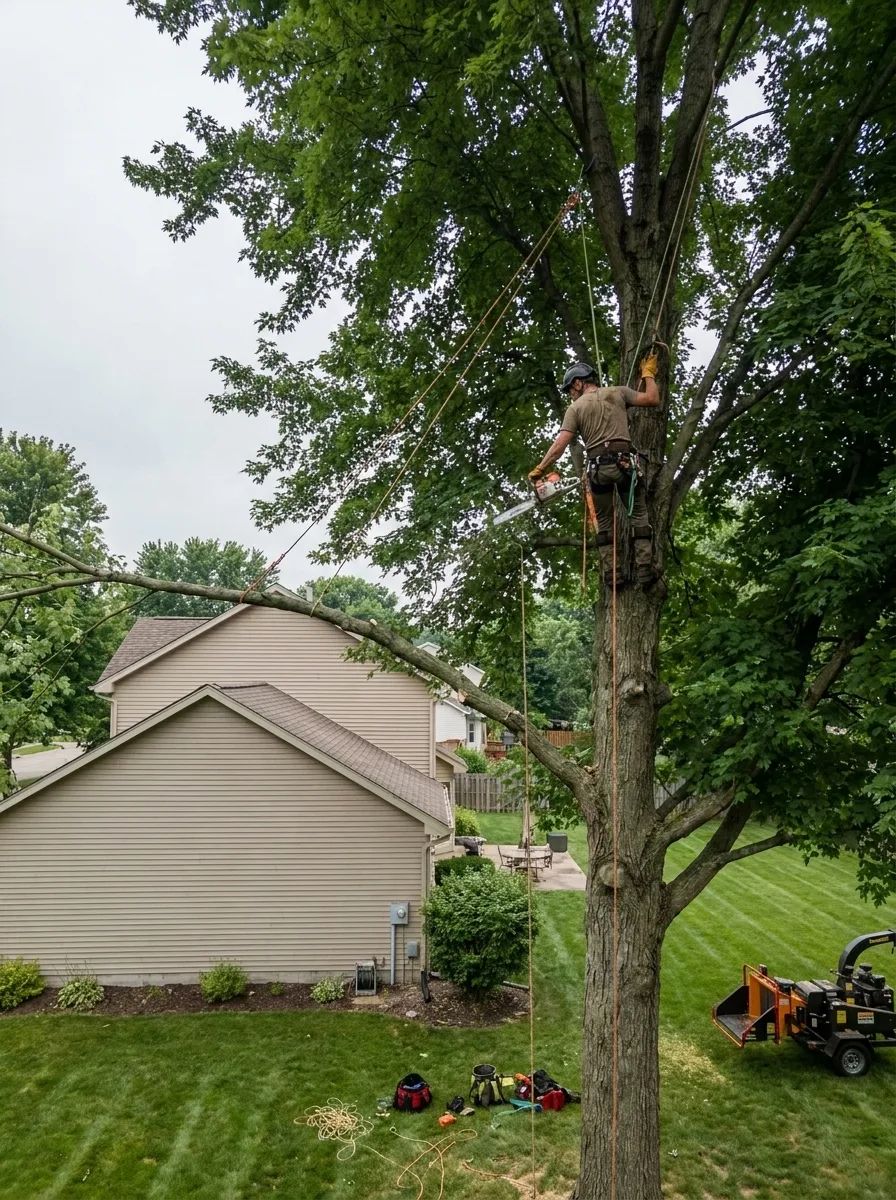
Limbs Pulled Back Off the Roof, the Drive and the Power Drop
Branches dragging on shingles hold moisture and wear the roof. Limbs over the driveway drop sap and sticks. The crew cuts for real clearance, not a trim that grows back into the same problem by August.
Crown Thinning for Light and Wind Movement
A tight crown catches wind like a sail and shades out the grass and shrubs underneath. Thinning lets air through and takes load off the structure without stripping the tree.
Years in the Roanoke Valley
Better Business Bureau
Estimate, every job
How the Crew Prunes a Tree So the Cuts Heal
1. Your Arborist Reads the Canopy and Marks the Cuts
He notes species, structure, decay and where the weight sits. He sets the plan on the ground before anyone goes up.
2. The Crew Protects the Beds, Shrubs and Turf Below
Beds and shrubs get covered, the work zone gets roped off, and nothing lands where it can do damage.
3. The Climber Works the Tree on Ropes, Not on Spikes
Spikes wound a tree you intend to keep. On a pruning job the climber moves on ropes, or the crew works from the bucket truck.
4. Every Cut Lands at the Branch Collar So the Wound Seals
Flush cuts and stub cuts invite decay and disease. Cutting at the collar lets the tree close the wound itself, which is the whole point of hiring an arborist. We do not top trees.
5. The Crew Chips the Brush and Rakes the Ground Clean
We chip the brush and sweep chips off the lawn and drive. We leave your yard cleaner than we found it. The mulch is yours if you want it.
Get My Free EstimateThey honored their estimate quote that was over a year old.
Healthy in Heart • Google review, 2021
Recent Tree Jobs, Finished and Cleaned Up
See jobs near you.
Tree Trimming & Pruning
Climber taking a long limb off a hillside hardwood

Tree Removal
Dead hardwood taken down in sections over a brick ranch

Cleanup and haul off
Logs and brush loaded out before the crew leaves
Tree Service Reviews From Homeowners
These gentlemen have done tree work for me over the past 20 years... they are thoroughly honest and reliable and they show up to work when they say they will.
Mary Justice • Google review, 2022
The tree they pruned/trimmed was a long neglected Pin Oak that is massive and overgrown, now looks like a different tree and my backyard looks awesome!
Melissa Page • Google review, 2020
Before you call
How often should a tree be pruned?
Most mature hardwoods want a look every three to five years. Trees over a roof, a drive or a play area get checked more often because the consequences are closer. Trees kept on a schedule need light trimming each time. A tree nobody has touched in years needs a plan instead, and your arborist tells you which one you have while he is out pricing the work.
Is there a wrong time of year to trim?
For most trees, no. Deadwood and limbs over the house come out whenever you call, and storm damage does not wait for a season. Oak and elm are the exception here, because they get cut in the dormant season to keep the diseases that move through them from finding a fresh wound. Tell your arborist what the tree is and he schedules the work around it.
Will topping make the tree safer?
No, and J&J will not do it. Topping forces weak regrowth off the stubs, and that regrowth is attached badly enough to be the first part of the tree to fail in the next storm. Structural pruning takes the load off without setting the tree up to break. If topping feels like the only option left, the job is either trimming the crown properly or taking the tree out.
Can you reach limbs over the roof without getting on it?
Yes. The crew works above a roof from the bucket truck or on rope from inside the tree, and heavy limbs come down on a rigging line instead of a free drop. Where the yard is too tight for the bucket, the grapple saw crane picks the limb and cuts it in one move. Nobody walks the shingles, and the beds and shrubs underneath get covered before the first cut.
Do you take the brush with you?
Yes. Brush is chipped and hauled, chips are raked out, and the mulch stays only if you ask for it. The crew sweeps the chips off the lawn and the drive before the trucks pull off, so a trimming visit leaves less behind than a tree coming down does. If you want a pile of mulch kept back for the beds, say so at the start and the crew drops it where you want it.
More about tree trimming in Roanoke, VA
Trimming cuts J&J makes on a Roanoke, VA tree
- Deadwood comes out first on any trimming visit, because dead limbs are the ones that fall on homes below.
- Every cut lands just outside the branch collar, so the tree can seal the wound instead of leaving decay an open door.
- Crown thinning is the cut that takes selected limbs out through the top, so wind moves through instead of pushing on it.
- Crown raising is the cut that lifts the lowest limbs for clearance above a drive, a walk or the roofline of homes.
- Crown reduction is the trim that shortens long limbs back to a side limb large enough to take over as leader.
- Clearance cuts pull limbs off siding, gutters and the chimney, where rubbing damages the house and the tree together.
- Structural tree trimming on a young tree picks one leader early, which prevents the weak unions that fail years later.
- Storm-damaged limbs get cut back to a clean collar cut, because a torn stub does not seal and invites diseases in.
Trimming cuts J&J refuses on a Roanoke, VA tree
- Topping, a cut that takes a crown back to blunt stubs, because it forces weak regrowth and leaves the tree hazardous.
- Lion-tailing, a bad habit of cuts that strip the inside limbs and leave all the weight out where limbs break.
- Flush cuts hard against the trunk, because they take out the collar the tree needs to close its own wound.
- Taking more than a modest share of live crown in one visit, because trees need their leaves to recover from the cuts.
Things to consider before trimming a tree in Roanoke, VA
- What species it is, because oak and elm get cut in the dormant season for disease reasons, and that sets the schedule.
- Whether the limbs are dead or live, because dead limbs come out any time and live tree trimming follows the season.
- How close the limbs are to the house, since trimming above a roof needs rigging rather than a straight drop.
- Whether the tree took storm damage, because torn limbs are open wounds and tree pruning cleans those up first.
- How much crown you are asking to take, because tree trimming that goes too far stresses the tree instead of helping.
- What sits below the limbs, a shrub bed or a fence, because that decides whether the cut limbs get lowered or dropped.
- Whether roots have been damaged by grading, because a tree already stressed below takes lighter cuts above.
- What the terrain is like on the way in, since steep or soft ground changes what equipment reaches the trimming work.
- Whether you want clearance, health or a view, because tree trimming services handle those three with three different cuts.
- How long since the last trim, because trees on a schedule need light work and neglected ones need a full plan.
- Whether diseases are in the neighborhood, like Dutch elm disease or emerald ash borer, because those change tree pruning timing.
- Whether nearby homes share the same canopy, because limbs across a property line change what tree trimming services can cut.
When to prune a Roanoke, VA tree, by species
| Species | Window | Why the window matters |
|---|---|---|
| Oak | Dormant season | Fresh cuts while beetles are active help spread oak wilt |
| Elm | Dormant season | Dutch elm disease moves the same way, through fresh cuts |
| Ash | Dormant season | Damage from emerald ash borer reads clearest with the leaves off |
| Maple | Late spring or summer | Late winter cuts bleed sap, which is harmless but messy |
| Birch | Late spring or summer | Same sap flow as maple, so the crew waits until leaves are out |
| Walnut | Late spring or summer | Sap runs heavy on cuts made late in winter |
| Flowering cherry and dogwood | Right after bloom | Cutting before bloom takes off the flower buds already set |
| Redbud | Right after bloom | Same reason, and a full season follows for it to recover |
| Pine and other conifers | Late winter, before new growth | Cuts made before the candles push close over cleanest |
| Any species, dead or torn limbs | Any time of year | A dead or torn limb is an open wound already, so the cut is not seasonal |
Request a free tree estimate
Thanks. An arborist will call you back about the tree.
That did not send. Please call (540) 588-8832 instead.

Ready to Get That Tree Handled?
Talk to a certified arborist who owns the company. Free estimates across the Roanoke Valley, and we haul off every limb before we leave.
The crew runs out of Moneta and works the Roanoke Valley daily.